
What Is MOS? Military Occupational Specialty Explained
From Army job codes to civilian career translation — everything service members need to know.
By Kasen Stephensen
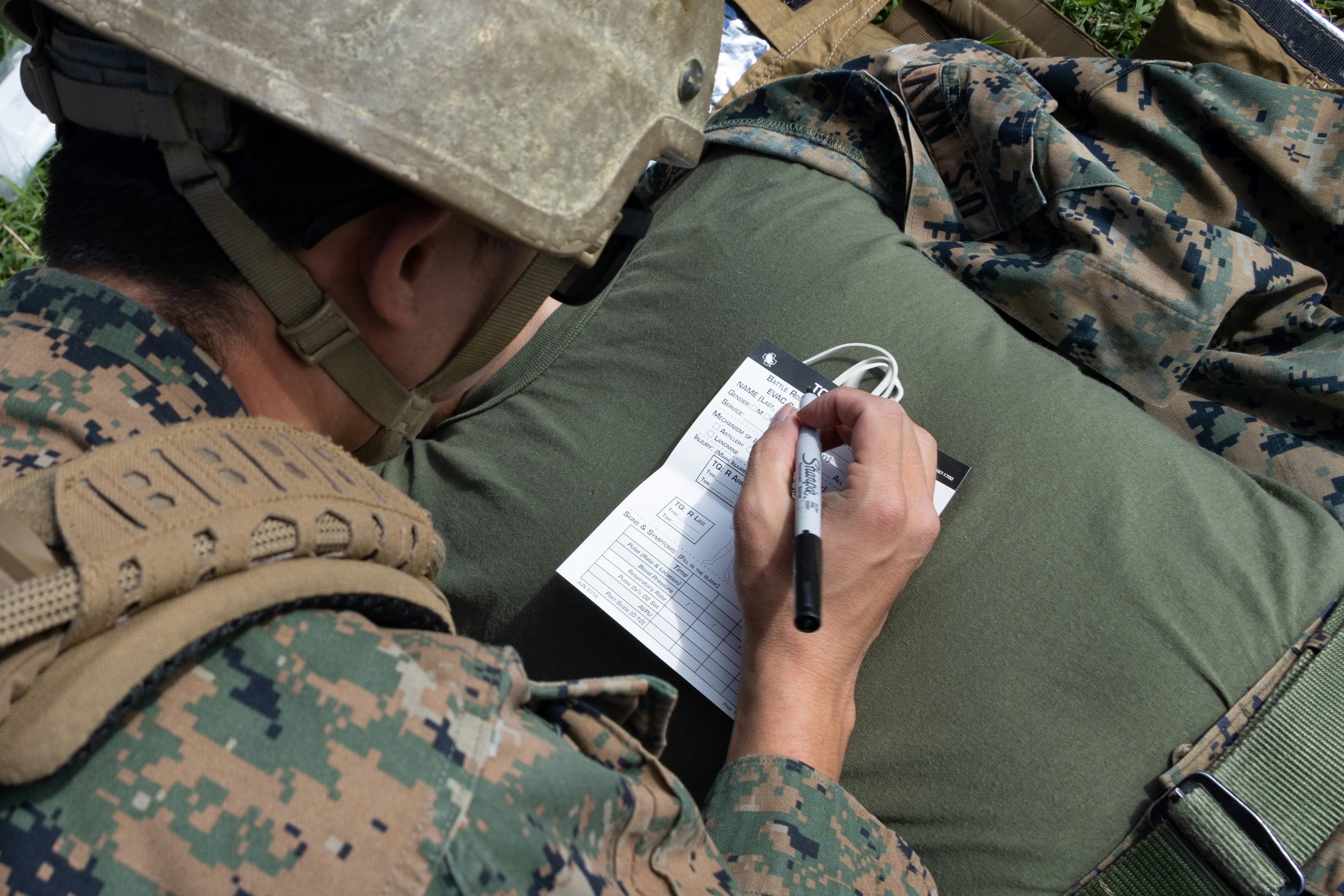
If you've ever filled out a military job application, spoken with a recruiter, or browsed hiring resources, you've likely encountered the acronym MOS. MOS stands for Military Occupational Specialty — the Army's standardized system for classifying every enlisted soldier by their primary job function. Think of it as a job code, a career track, and a professional identity compressed into a two-to-three character alphanumeric designation.
The Army alone lists roughly 190 MOS designations, organized into Career Management Fields where related specialties share the same first two digits. Zoom out across all branches, and the armed forces encompass more than 10,000 distinct specialties — each representing a unique set of skills, responsibilities, and career pathways.
Other branches use different terminology: the Air Force assigns Air Force Specialty Codes (AFSCs), the Navy uses naval ratings and the NEC system, and the Coast Guard uses its own ratings framework — but all serve the same organizational purpose as an MOS.
For service members translating military experience into civilian careers, understanding your MOS is the first step toward a resume that actually lands interviews. Transitioning service members may also find SkillBridge employer partners actively recruiting by MOS-relevant skill set — more on that at the end of this guide.
What Is MOS — and What Does the Code Actually Mean?
MOS stands for Military Occupational Specialty — an alphanumeric code used primarily by the U.S. Army and Marine Corps to designate a specific job role within the military structure. If you've seen a code like 11B (Infantry) or 0311 (Rifleman), you've seen an MOS in action.
But an MOS is more than a label. It determines which training pipeline a service member enters, which units they're eligible to join, how they're evaluated for promotion, and what their career trajectory looks like across an entire enlistment or commission. From day one at a duty station, the MOS shapes nearly every professional decision a service member makes.
An Army MOS code follows a consistent alphanumeric format: a two-digit number that identifies the Career Management Field (CMF), followed by a letter that pinpoints the specific specialty within that field. CMF 11 is Infantry. Within that field:
- 11B — Infantryman
- 11C — Indirect Fire Infantryman
- 11Z — Infantry Senior Sergeant
All three belong to the same Career Management Field, but each represents a distinct role with different training, responsibilities, and day-to-day duties. The shared "11" tells you they're related; the letter tells you exactly what the job is.
Where it gets more nuanced: a service member rarely holds just one MOS. The Army assigns a Primary MOS (PMOS) — the core specialty a soldier is trained and coded for. Over a career, a soldier can earn a Secondary MOS (SMOS) through additional schooling or demonstrated proficiency in a second specialty. On top of that, Additional Skill Identifiers (ASIs) flag specific qualifications layered onto a PMOS — things like Ranger training, SERE instructor certification, or advanced language proficiency. A soldier's personnel file often reflects all three.
This distinction matters practically. A soldier's Duty MOS (DMOS) — the specialty tied to their current assignment — may differ from their primary if they've been tasked outside their core role. When translating military experience for a civilian employer, the full picture (PMOS, SMOS, and ASIs) is often more valuable than any single code.
Which Branches Use MOS — and What Other Branches Call It
MOS is Army and Marine Corps terminology. If you served in another branch, you had the same concept under a different name — and if you're a transitioning service member writing a resume or talking to a civilian recruiter, knowing the correct term for your branch matters.
Here's how each branch labels its personnel classification system:
- Army: Military Occupational Specialty (MOS) — organized into Career Management Fields (CMFs), where related specialties share the same first two digits. The Army lists roughly 190 MOS designations across its structure.
- Marine Corps: Also uses MOS, with its own numbering system and occupational field groupings distinct from the Army's.
- Air Force: Air Force Specialty Code (AFSC) — a combination of letters and numbers that identifies career field, skill level, and specific duty position.
- Navy: Naval Ratings (for enlisted) combined with the Navy Enlisted Classification (NEC) system, which adds a four-digit code to capture more specific technical skills beyond a sailor's primary rating.
- Coast Guard: Uses a ratings system similar to the Navy's, reflecting the shared maritime tradition between the two services.
- Space Force: Uses its own Specialty designators, still maturing as the newest branch of the armed forces.
The names are different. The function is identical: every branch needs a standardized way to match personnel to jobs, track qualifications, assign duty positions, and manage career progression.
Across all six branches combined, the armed forces encompass more than 10,000 different specialties — covering technical, administrative, combat, medical, intelligence, and support roles at every level of responsibility.
For transitioning service members, the practical implication is this: when a civilian employer asks "what was your MOS?", they're really asking what you did. Your answer — whether it's an MOS, AFSC, rating, or NEC — translates directly to the skills and experience you bring to their organization. The label is branch-specific. The value is universal.
Examples of Common MOS Designations
The U.S. Army alone lists roughly 190 MOS designations, organized into Career Management Fields where related specialties share the same first two digits. A few examples illustrate the range:
Combat Arms
- 11B — Infantryman: The Army's frontline ground combat specialty. 11B soldiers master small-unit tactics, weapons systems, and direct action operations.
- 13B — Cannon Crewmember (Field Artillery): Operates and maintains howitzers and field artillery systems in support of ground forces.
Healthcare and Medical
- 68W — Combat Medic Specialist: One of the most transferable MOS designations in the Army. 68W soldiers provide emergency medical treatment in the field and serve as primary care extenders on base. The civilian equivalent — EMT, paramedic, or licensed practical nurse — is a direct translation.
Signal and Communications
- 25U — Signal Support Systems Specialist: Installs, operates, and maintains communication equipment including radios, satellite systems, and battlefield networks. In a civilian context, 25U experience maps directly to IT support, network administration, and telecommunications roles.
Intelligence
- 35L — Counterintelligence Agent: Conducts operations to detect and neutralize foreign intelligence threats. The analytical rigor and security clearance that come with 35L make this one of the more sought-after backgrounds in defense contracting and federal law enforcement.
Logistics and Supply
- 92A — Automated Logistical Specialist: Manages inventory, supply chain operations, and property accountability using Army logistics systems. These aren't warehouse clerks — they're managing multi-million-dollar asset accountability at operational scale.
The breadth here is the point. Military occupational specialties span emergency medicine, signals intelligence, heavy equipment operation, financial management, legal administration, and dozens of other domains. When you're translating your MOS on a resume, the goal is to map the function — not just list the code. Most civilian hiring managers won't recognize "92A," but they immediately understand "managed inventory accountability for a $4M equipment fleet." For more on making that translation effectively, see our resume tips Your Resume Isn’t Your Biography: Resume Tips for Service Members Entering Civilian Work built specifically for transitioning service members.
How Service Members Are Assigned an MOS
MOS assignment follows a structured sequence that starts before a service member ever sets foot on a base.
Step 1: ASVAB scores establish the baseline. The Armed Services Vocational Aptitude Battery (ASVAB) tests aptitude across ten subject areas, producing composite line scores that determine which MOS categories a recruit qualifies for. A high mechanical score opens different doors than a high clerical or electronics score. Some specialties — particularly signals intelligence, cyber, and nuclear — carry strict minimum composite requirements.
Step 2: Recruiter discussions narrow the field. With qualifying scores in hand, a recruiter walks the enlistee through available options. The Army lists roughly 160 MOS designations for enlistees, but availability isn't uniform. Mission requirements, current manning levels, and the needs of the service shape which slots are actually open at any given time.
Step 3: Formal training confirms the designation. Once a contract is signed with a specific MOS, the recruit completes Basic Combat Training and then moves to Advanced Individual Training (AIT) or an MOS-producing school. Graduating from that training formally locks in the designation.
Officers follow a parallel track. Commissioned officers don't receive an MOS code in the enlisted sense. Instead, they're assigned to a branch — Infantry, Signal, Finance, Medical, and so on — through a preference-and-needs process that factors in OCS or ROTC performance, branch availability, and personal rankings.
Changing Your MOS: What Reclassification Looks Like
Your MOS isn't necessarily permanent. Service members can formally request a change through reclassification — but it requires command approval, meeting the ASVAB score requirements for the target MOS, and alignment with current force structure needs.
Reclassification requests typically fall into a few categories:
- Force structure changes. When the Army resizes or restructures a specific MOS, involuntary reclassification can happen — your specialty gets absorbed, consolidated, or cut.
- Physical limitations. A service member who can no longer meet the physical demands of their current MOS due to injury or medical change may be reclassified into a role that fits their updated profile.
- Personal development goals. Mid-career service members sometimes seek reclassification to build skills in a new domain — whether to pursue promotion in a high-demand field or to position themselves for a civilian career after separation.
- Transition preparation. A service member in a highly specialized military role with no direct civilian equivalent may seek reclassification into something with stronger crossover — logistics, IT, healthcare — to make their final years of service more translatable.
In the Army, reclassification goes through a formal packet submitted to Human Resources Command (HRC), with input from your unit commander. ASVAB line score requirements for the target MOS must be met — there are no waivers on that threshold. Military OneSource is a reliable starting point if you're evaluating whether reclassification makes sense for your situation.
Your MOS and Your Civilian Career: How Military Skills Translate
Your MOS is a compressed record of your technical training, operational experience, and demonstrated competency. Most MOS designations map directly to high-demand civilian industries:
- Signal Corps (25-series) → IT, cybersecurity, network administration
- Combat Medic (68W) → healthcare, emergency medicine, clinical support
- Logisticians (88-series and 92-series) → supply chain management, operations, procurement
- Combat Engineers (12-series) → construction management, civil infrastructure, project engineering
- Military Intelligence (35-series) → data analysis, federal contracting, risk management
- Finance (36B) → accounting, financial analysis, corporate banking
The most effective transitioning service members don't start from scratch when mapping civilian options. They start from their MOS and build outward. If your DMOS is in the 25-series, you have documented experience in communications systems, network operations, and information security. That's not a resume interpretation exercise — that's a direct credential.
A Note for Employers: How to Read an MOS on a Resume
If you're reviewing a resume from a transitioning service member and see a code like "91B" or "25U," treat it the way you'd treat a professional certification — look it up before forming an opinion. The two-character prefix identifies the Career Management Field; the trailing letter indicates the specific specialty. A quick search on any branch's official MOS list will tell you exactly what that candidate was trained to do, often at a level of technical depth that took years to achieve.
For a deeper look at how to present — or evaluate — military experience on paper, the Your Resume Isn’t Your Biography: Resume Tips for Service Members Entering Civilian Work guide covers the full translation process.
Using Your MOS to Find SkillBridge Opportunities
Your MOS is also a practical search tool when exploring the DoD SkillBridge program. SkillBridge allows active duty service members within 180 days of separation to complete a full-time internship with a civilian employer partner while continuing to receive their full military pay and benefits — at zero cost to the employer. The alignment between MOS and SkillBridge placement is often direct: a 25U maps naturally to cybersecurity and IT roles, a 68W to healthcare partners, a 92A to logistics and supply chain companies.
For a full breakdown of how the program works, see What Is SkillBridge? A Modern Guide for Employers and Transitioning Service Members.
If you're mapping your MOS to civilian opportunities right now, browse open opportunities by MOS-relevant keyword on Milivate's job board to see which employer partners are actively recruiting in your field. Are you an employer? Learn how to post SkillBridge opportunities and access a pipeline of trained, zero-cost candidates.
Related Posts

How to Write a Military Resume That Civilian Employers Understand

Military Resume Writers: How to Find the Right Help